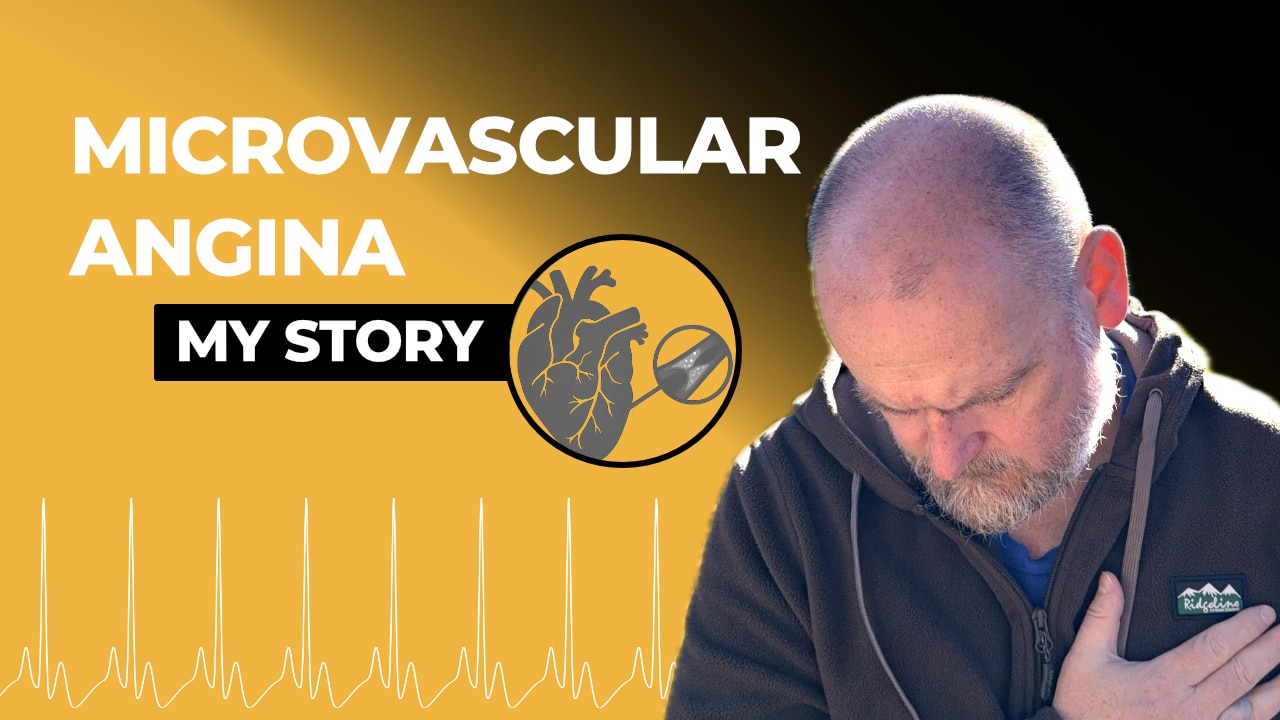
When I first began experiencing chest pain and breathlessness, I never imagined the journey it would take me on. What started as a classic case of angina — caused by a blocked LAD artery that thankfully didn’t become a “widowmaker” heart attack — turned into something far more complex: microvascular angina (MVA).
After having a stent fitted, I felt ten years younger. But just a few months later, the pain returned. What followed was months of frustration, cancelled appointments, trial and error with medication, and a growing sense of isolation as I struggled to understand what was happening to my own body.
In my latest video, I share that journey — from the first signs of trouble to finally receiving a diagnosis of microvascular angina, an often under-diagnosed heart condition that affects the tiny blood vessels supplying the heart.
🎥 Watch here → Living With Microvascular Angina | My Story, Struggles & Tips
What Is Microvascular Angina?
Unlike traditional angina, which is caused by blockages in the large coronary arteries, microvascular angina affects the small blood vessels that branch out deep into the heart muscle. These vessels can constrict or become damaged, limiting blood flow and causing pain, breathlessness, and fatigue — even when larger arteries look completely healthy on an angiogram.
It’s sometimes called “cardiac syndrome X”, and because standard tests often appear normal, it’s easy for sufferers to be told nothing is wrong. But the pain is very real.
My Experience
In the video, I talk about:
How my symptoms returned just months after my stent
The frustration of being told my arteries were clear
How medications like isosorbide mononitrate, ranolazine, and nicorandil helped me manage symptoms
What it feels like to live with a condition that’s invisible on most scans
The daily adjustments that help me stay active — including early-morning walks and runs before symptoms build up later in the day
Coping and Finding BalanceLiving with MVA means finding a rhythm that works for you. For me, that means taking my medication early, allowing time for it to take effect, and getting out into the countryside — running or walking gently while I feel my best. The outdoors has become a kind of therapy, offering peace, perspective, and purpose on the difficult days.
If my story helps even one person recognise their symptoms or feel less alone, it’s worth sharing.
Watch the Full Video
👉 Watch on YouTube: Living With Microvascular Angina | My Story