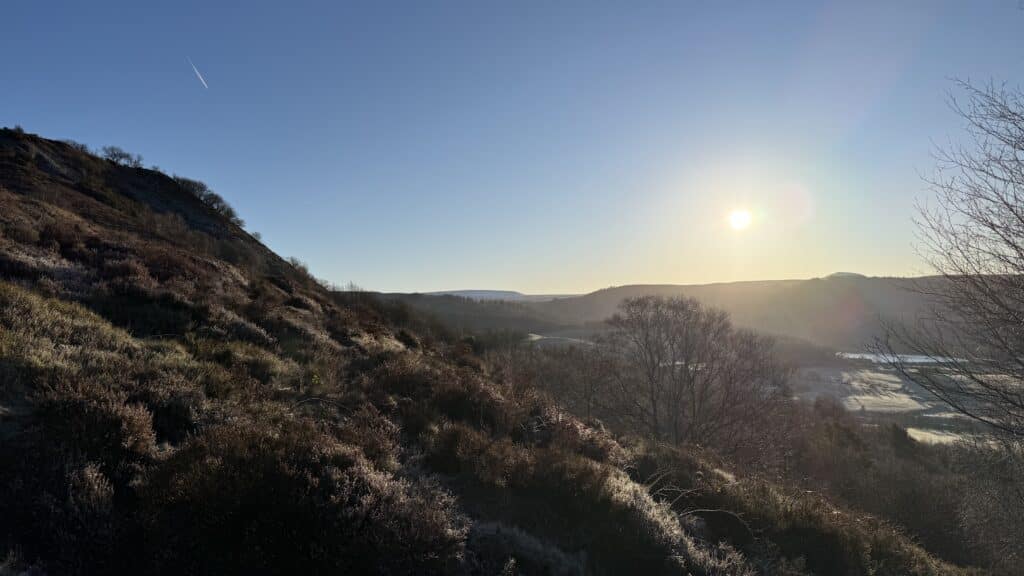
Tegg’s Nose is one of the most dramatic viewpoints in Cheshire. Rising above Macclesfield on the western edge of the Peak District, this gritstone hill marks the point where the upland landscape suddenly drops away into the wide, flat sweep of the Cheshire Plain.
From the summit ridge the views are immense. To the east lie the wooded hills of Macclesfield Forest and the distinctive cone of Shutlingsloe – often called the “Cheshire Matterhorn.” Turn west and the land falls away across farmland, towns and distant cities stretching far across Cheshire.
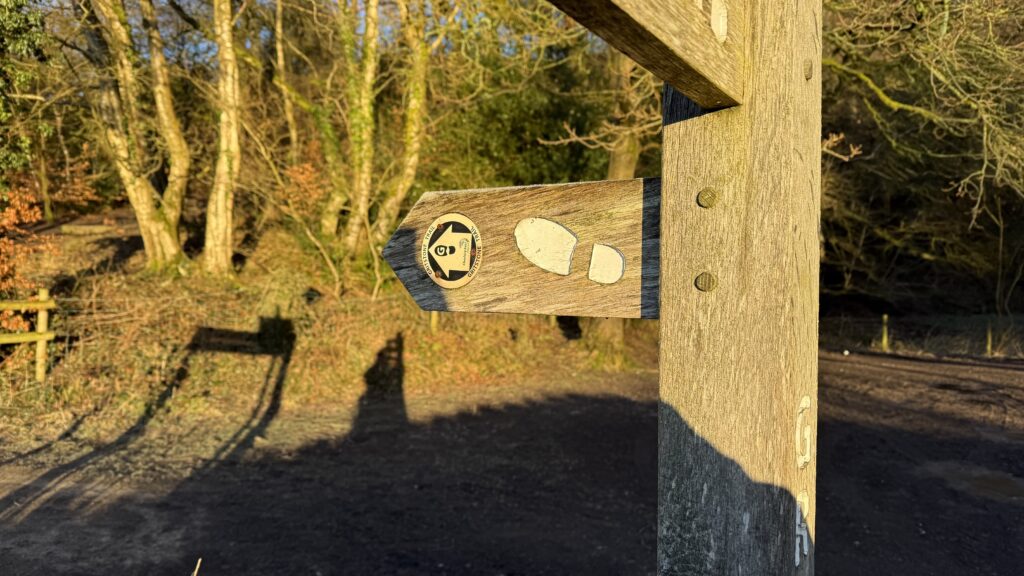
This circular walk follows part of the Gritstone Trail, climbing steeply through woodland before emerging onto open gritstone slopes and historic quarry sites.
Distance: Approx 4–5 miles
Time: Around 2 hours
Difficulty: Moderate (steep climb at the start)
Start Point: Near Bottoms Reservoir / Teggsnose Reservoir, Langley
Parking: Holehouse Lane, Langley
The walk begins near the reservoirs above Langley village and quickly joins the Gritstone Trail, a 35-mile long-distance footpath running along the western edge of the Peak District from Disley to Kidsgrove.
The initial climb is steep but short, gaining around 500 feet in less than a mile. Once the climb is complete, the route becomes much gentler and the views begin to open up.
At around 380 metres above sea level, Tegg’s Nose sits at one of the most striking landscape boundaries in England.
To the west you can see the vast agricultural patchwork of the Cheshire Plain, with Macclesfield directly below and landmarks such as Jodrell Bank Observatory visible on a clear day.
Looking east, the hills rise into the Peak District, with Macclesfield Forest filling the valley below and the distinctive peak of Shutlingsloe dominating the skyline.
This contrast between wild upland scenery and flat countryside is what makes Tegg’s Nose such a special place to visit.
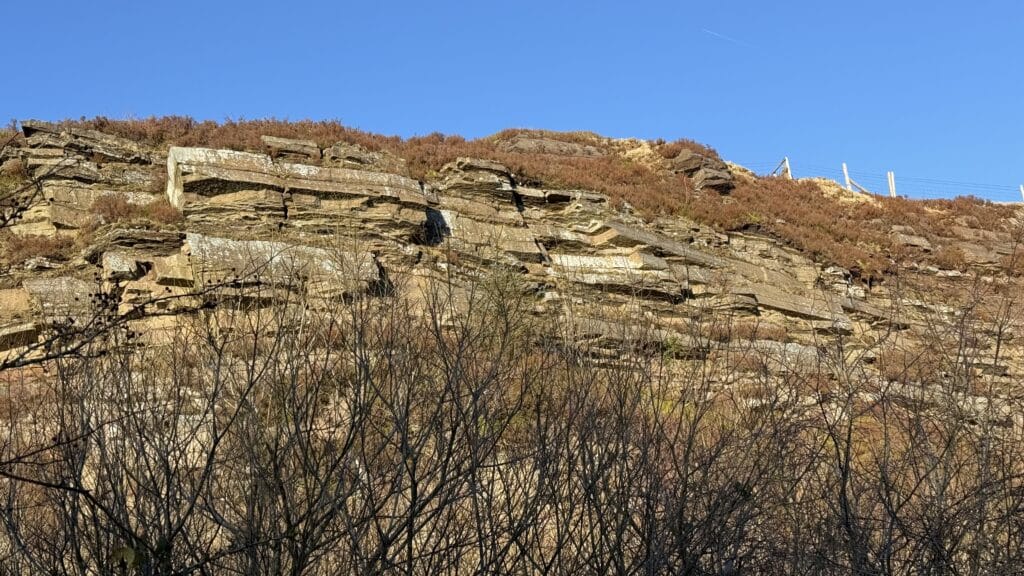
The rocky outcrops around the summit are made from Millstone Grit, a coarse sandstone laid down around 320 million years ago during the Carboniferous period.
At that time Britain lay close to the equator, and vast river systems deposited sand and gravel into huge tropical deltas. Over millions of years these sediments hardened into the gritstone that now forms the hills along the western edge of the Peak District.
Tegg’s Nose marks the point where these older rocks meet the much younger red sandstones beneath the Cheshire Plain, creating the dramatic escarpment that gives the hill its famous views.
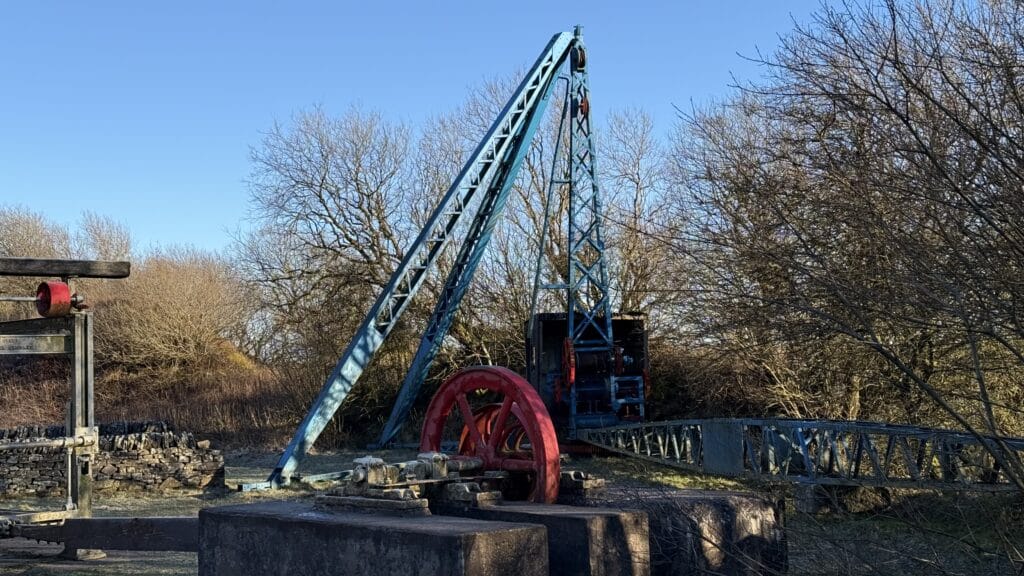
For centuries Tegg’s Nose was an active quarry. Stone was extracted here from at least the 16th century and used across the region for buildings, roads and gravestones.
Early quarry workers cut the stone entirely by hand using chisels and pickaxes. In the 20th century blasting and mechanical crushing were introduced, dramatically increasing production.
The quarry finally closed in 1955, and the area was later transformed into Tegg’s Nose Country Park. Today visitors can still see the exposed rock faces and remnants of the quarrying equipment that once operated here.
At that time Britain lay close to the equator, and vast river systems deposited sand and gravel into huge tropical deltas. Over millions of years these sediments hardened into the gritstone that now forms the hills along the western edge of the Peak District.
Tegg’s Nose marks the point where these older rocks meet the much younger red sandstones beneath the Cheshire Plain, creating the dramatic escarpment that gives the hill its famous views.
The route briefly follows the Gritstone Trail, one of Cheshire’s best-known long-distance paths.
Stretching roughly 35 miles (56 km) from Disley to Kidsgrove, the trail follows a chain of gritstone hills along the western edge of the Peak District.
Tegg’s Nose is one of the most dramatic points along the route, offering huge views in almost every direction.
Although the scenery feels wild and remote, Tegg’s Nose is surprisingly accessible. The route is relatively short and once the initial climb is complete the rest of the walk is relaxed and enjoyable.
With its combination of sweeping views, fascinating geology and industrial history, it’s easy to see why Tegg’s Nose is considered one of the best viewpoints in Cheshire.
Get the full route map and GPX file here: